

Financial literacy for kids is more than just a buzzword—it’s a foundation for lifelong independence. When young people understand the basics of money, from saving to responsible spending, they are better prepared for real-world challenges.
In the US, there’s a growing focus on introducing these concepts early, helping children and teens gain confidence in their financial choices. By using engaging tools, relatable examples, and age-appropriate lessons, parents and educators can transform complex topics into practical skills.
Programs that make learning about money fun
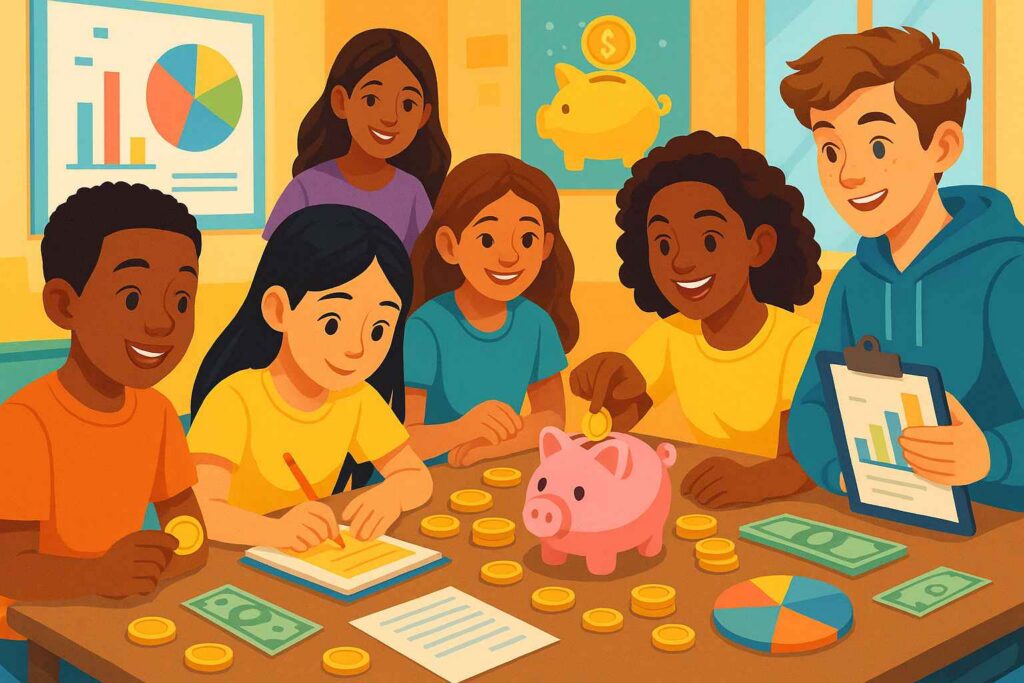
Many US-based initiatives offer creative ways to teach financial concepts. From classroom programs to mobile apps, these tools make it easier for young learners to absorb key lessons. Organizations often partner with schools to introduce age-specific content, ensuring topics match students’ cognitive development.
This means younger children might learn about saving and wants versus needs, while teenagers can explore budgeting, credit, and investments. By tailoring the learning, kids stay engaged and retain more. One popular approach involves gamification—turning lessons into challenges or simulations.
Virtual stock markets, budgeting games, and allowance trackers can make learning feel like play, encouraging kids to try different strategies without real-world risks. These platforms also give immediate feedback, so children can see the impact of their decisions in real time.
Apps and digital platforms gaining popularity
Technology plays a major role in modern financial education. Apps like Greenlight or GoHenry give parents tools to manage allowances, set spending limits, and track purchases with their kids. These services often include built-in lessons, quizzes, and goal trackers, allowing children to visualize progress toward their savings targets.
Beyond apps, online courses and interactive videos cater to different learning styles. Some resources offer live virtual classes, letting students ask questions and discuss scenarios with instructors. This variety ensures that whether a child learns best through visuals, hands-on practice, or discussion, there’s a suitable resource to support their journey toward financial independence.
The role of parents and schools
While technology is a valuable tool, nothing replaces the influence of parents and educators. Families who involve their children in everyday financial decisions—like grocery budgeting or planning a vacation—can help make abstract lessons more concrete. Even small acts, such as letting kids compare prices or calculate discounts, provide real-world context that reinforces classroom learning.
Schools, on the other hand, can integrate these lessons into math, social studies, or even extracurricular clubs. By embedding money topics across subjects, students begin to see financial skills as a natural part of life, rather than a separate chore. Some schools also invite guest speakers from local banks or community organizations to share practical insights, further bridging the gap between theory and reality.
Encouraging consistent practice
Like any skill, managing money improves with regular use. Parents can encourage practice by setting small financial challenges, such as saving for a personal goal or keeping track of weekly spending. Educators might assign projects where students plan a budget for a school event or simulate running a small business.
These activities give children ownership of their decisions and allow them to experience both successes and setbacks in a safe environment. Celebrating milestones—whether it’s reaching a savings goal or sticking to a budget—helps build positive associations with financial responsibility. Over time, these repeated experiences shape confident, informed individuals who are prepared to navigate adult life.
Building a strong future through early financial education
When children grow up with consistent exposure to money management, they enter adulthood with a clear advantage. They’re more likely to avoid debt traps, understand the value of saving, and make choices that align with long-term goals.
By combining engaging tools, supportive family involvement, and formal school programs, communities can equip the next generation with skills that will serve them for life. Investing time in these lessons isn’t just about dollars and cents—it’s about giving kids the freedom to make decisions that reflect their values and aspirations.